Festive season drinking: what the alcohol guidelines say
The festive season often brings more catch-ups, work parties and long summer afternoons. For many people it also brings more drinks than usual. Here is what Australia's alcohol guidelines say and some simple ways to enjoy the season while keeping your risk low.
What the guidelines say
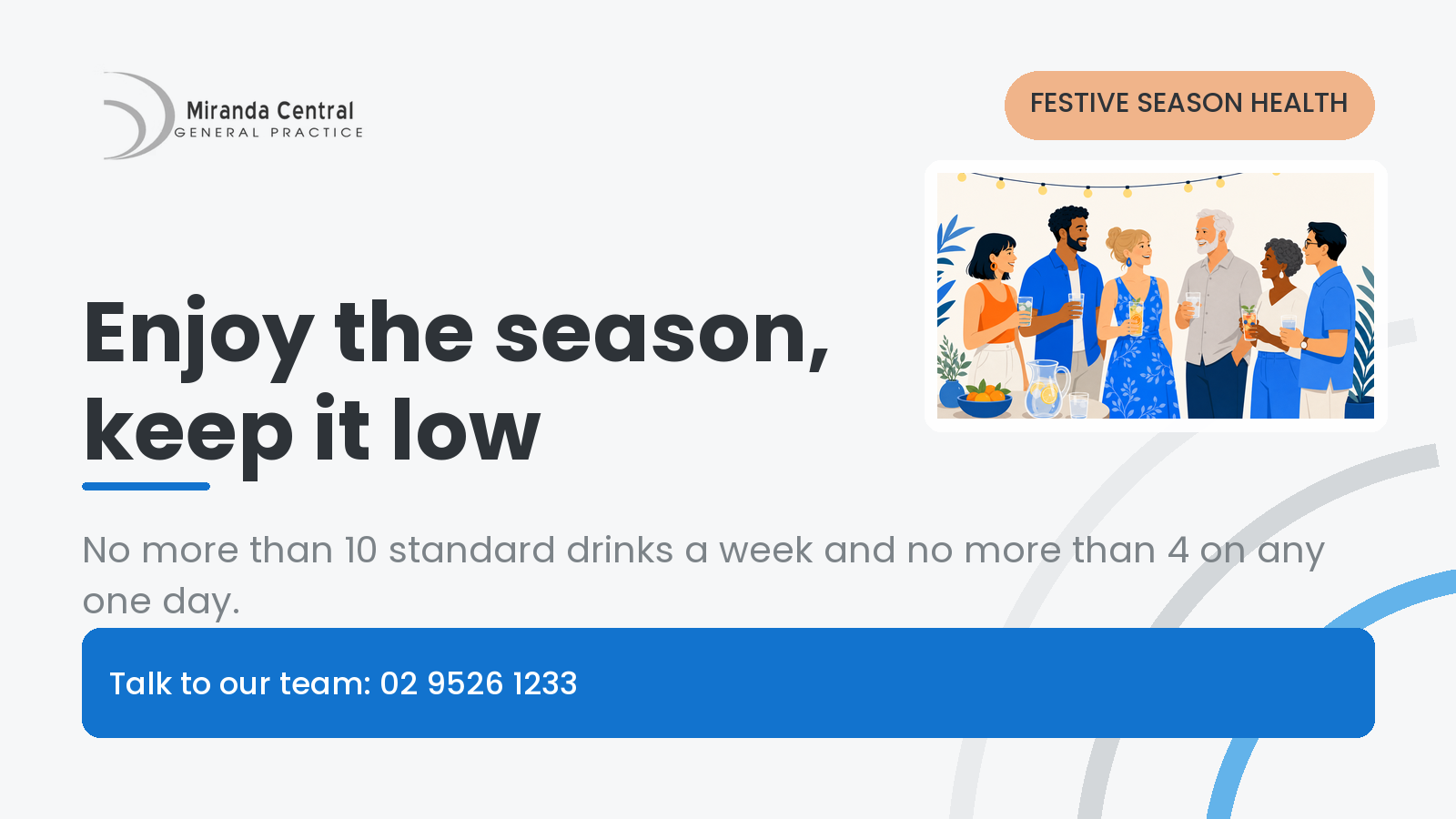
The National Health and Medical Research Council (NHMRC) sets Australia's guidelines to reduce health risks from drinking alcohol. For healthy adults, the advice is to drink no more than 10 standard drinks a week and no more than 4 standard drinks on any one day.
The less you drink, the lower your risk of harm. Alcohol is never completely safe. For some people, not drinking at all is the safest choice.
People under 18 should not drink alcohol.
If you are pregnant or planning a pregnancy, the advice is not to drink alcohol.
If you are breastfeeding, not drinking alcohol is safest for your baby.
A standard drink is smaller than you think
A standard drink contains 10 grams of pure alcohol. That is about the amount your body can process in one hour. It does not matter whether it is beer, wine or spirits, or what it is mixed with.
Many drinks contain more than one standard drink. An average glass of wine is about 1.6 standard drinks. So is a full-strength beer served in a pub. A 375 mL can of premixed spirits is about 1.5. The label on every bottle, can or cask shows how many standard drinks it holds.
Simple ways to keep it low
Count your drinks and check the label.
Alternate alcoholic drinks with water or another non-alcoholic drink.
Pace yourself. More than one standard drink an hour raises your blood alcohol level.
Try a mocktail or an alcohol-free option.
Plan how you will get home. Never drink and drive.
Coffee, a cold shower or being sick will not remove alcohol from your blood. Only time does that.
Alcohol and your medicines
Alcohol can interact with many medicines. This includes prescription medicines, over-the-counter medicines and herbal products. It can make side effects worse or make a medicine work less well. Some combinations, such as alcohol with opioids or benzodiazepines, can be dangerous. If you take regular medicines, ask your GP or pharmacist whether it is safe to drink.
When to talk to your GP
Talk to your GP if you are worried about how much you drink, or if you would like to cut back. Some signs worth raising are needing more to feel the same effect, not feeling in control of your drinking or drinking affecting your relationships or work.
If you drink regularly or heavily, it can be dangerous to stop suddenly on your own. Your GP can help you make a plan and manage any withdrawal symptoms. You can also call the National Alcohol and Other Drug Hotline on 1800 250 015 for free, confidential advice.
Source: National Health and Medical Research Council, Australian guidelines to reduce health risks from drinking alcohol, nhmrc.gov.au/health-advice/alcohol
Australian Government Department of Health, Disability and Ageing, How much alcohol is safe to drink?, health.gov.au/topics/alcohol
healthdirect, Tips for safe and responsible drinking and Medicines and alcohol, healthdirect.gov.au


