World AIDS Day: HIV testing, prevention and treatment today
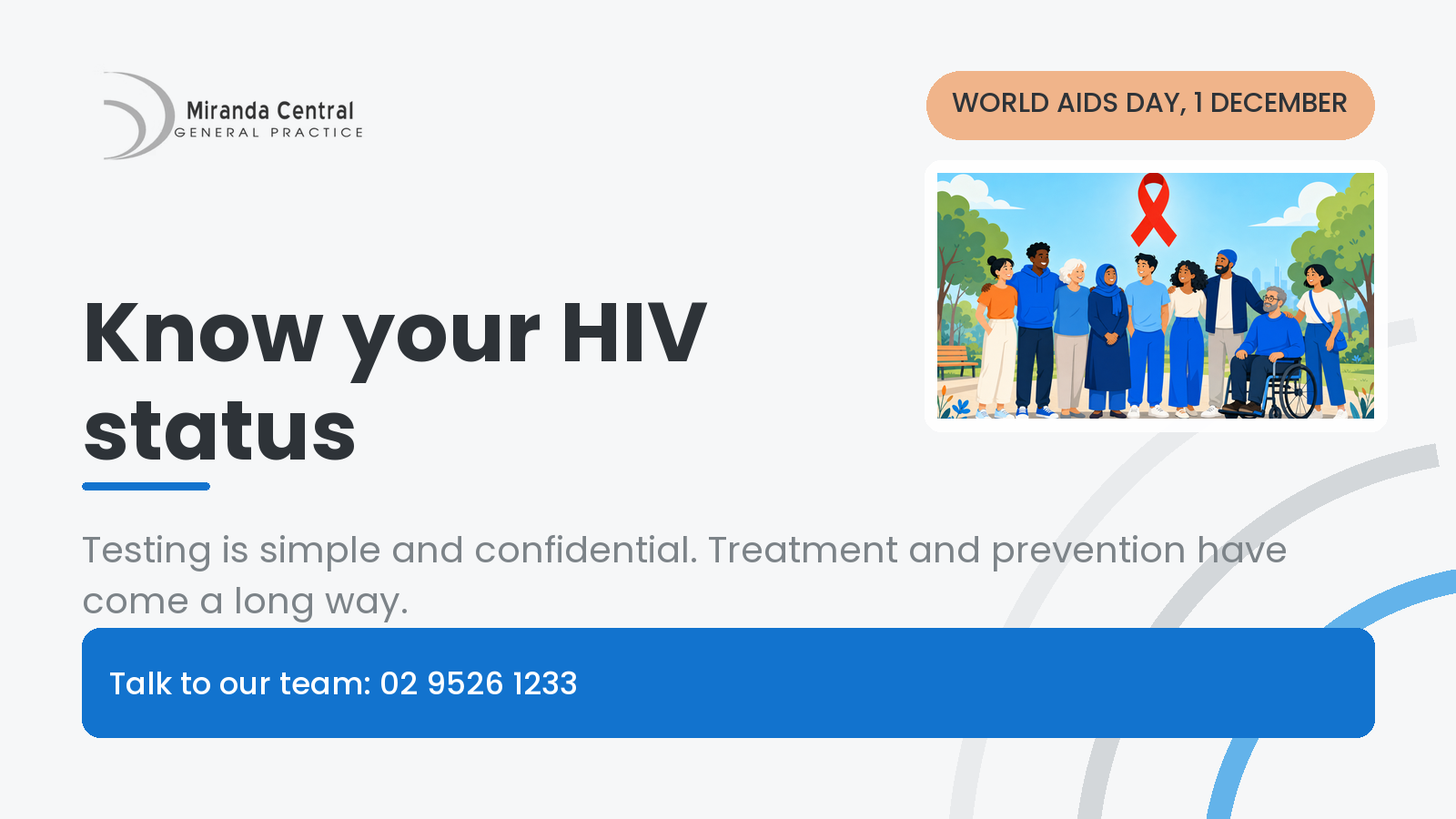
World AIDS Day is held on 1 December each year. It is a day to raise awareness of HIV, remember people who have died from AIDS-related illness and stand together against stigma. It is also a good moment to look at how much HIV care in Australia has changed.
What HIV is
HIV is a virus that damages the immune system. It is passed on through certain body fluids. In Australia this most often happens through sex without a condom or by sharing injecting equipment. AIDS is a late stage of HIV infection.
There is still no vaccine and no cure. With effective treatment, though, HIV is now a manageable long-term condition. People living with HIV can lead long and healthy lives.
Why testing matters
Many people with HIV have a short flu-like illness about two weeks after they are exposed. After that there may be no symptoms for many years, even though the virus is still in the body. A test is the only way to know.
HIV testing is recommended for anyone who thinks they may have been at risk. More frequent testing is recommended for some groups, including gay, bisexual and other men who have sex with men. There are three main ways to test:
A blood test sent to a laboratory. Results usually take a few days.
A rapid finger-prick test done by a health professional. Results are ready in 20 minutes or less.
A self-test you can do at home. Only use one approved by the Therapeutic Goods Administration (TGA).
Any positive rapid test or self-test needs to be confirmed with a blood test. Tests also have a window period. An exposure in the last three months may not show up yet, so talk to your GP about the right timing.
Prevention has changed
Condoms remain one of the best ways to prevent HIV and other sexually transmitted infections (STIs).
PrEP (pre-exposure prophylaxis) is a medicine for people at higher risk of HIV. It is highly effective at preventing HIV. It does not protect against other STIs.
PEP (post-exposure prophylaxis) is a medicine taken after a possible exposure. Start it as soon as possible, ideally within 72 hours. It is taken for four weeks. The NSW PEP hotline is 1800 737 669.
Undetectable means untransmittable
HIV treatment is called antiretroviral therapy. It stops the virus from multiplying and protects the immune system. Taken as prescribed, it can lower the amount of virus in the blood until a test can no longer detect it.
A person living with HIV who keeps an undetectable viral load cannot pass HIV on to sexual partners. This is known as U=U: Undetectable equals Untransmittable.
Talk to us
If you think you may have been exposed to HIV, or you would like to talk about testing or PrEP, book an appointment with your GP. Your conversation stays confidential.
For free sexual health advice you can also call NSW Sexual Health Infolink on 1800 451 624 on weekdays. healthdirect is available on 1800 022 222.
Source: NSW Health, HIV infection fact sheet, health.nsw.gov.au/Infectious/factsheets/Pages/HIV-infection.aspx
NSW Health, Ending HIV: HIV testing, health.nsw.gov.au/endinghiv/Pages/hiv-testing.aspx
World AIDS Day Australia, worldaidsday.org.au


