World Stroke Day: learn the signs of stroke
Thursday 29 October is World Stroke Day. The World Stroke Organization's campaign for 2026 is called Every Minute Counts. Its message is simple: learn the signs of stroke today.
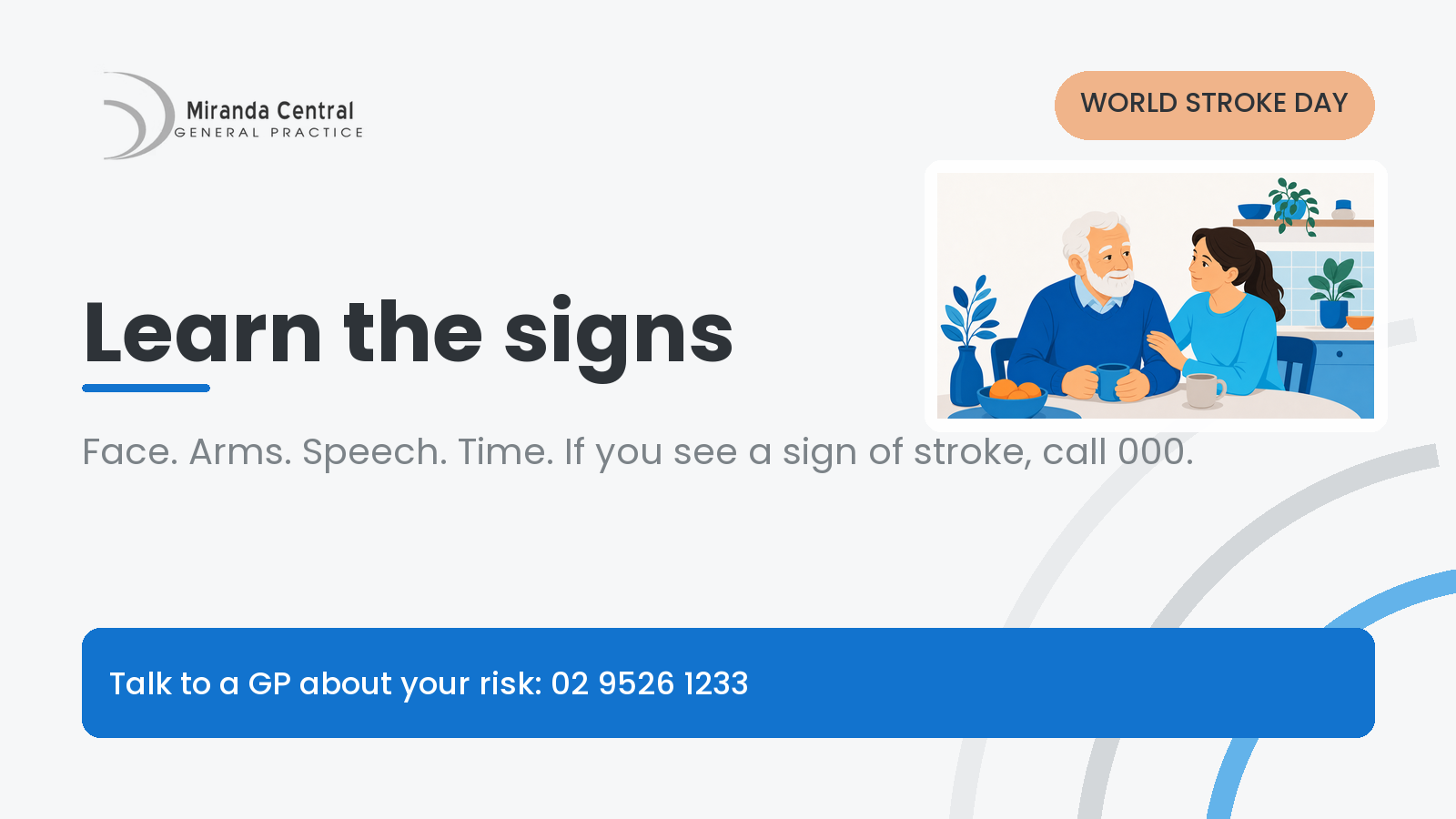
A stroke happens when blood can't reach part of the brain. Without blood, brain cells start to die. Knowing the signs and acting straight away can make a real difference.
Know the F.A.S.T. signs
The Stroke Foundation's F.A.S.T. test is an easy way to remember the most common signs of stroke:
Face: check their face. Has their mouth drooped?
Arms: can they lift both arms?
Speech: is their speech slurred? Do they understand you?
Time: time is critical. If you see any of these signs, call triple zero (000) straight away.
Other signs of stroke
Stroke can also cause:
numbness, clumsiness, weakness or paralysis in the face, arm or leg, on one or both sides of the body
dizziness, loss of balance or falling over for no reason
loss of vision in one or both eyes
a headache, usually severe and sudden
trouble swallowing
nausea or vomiting
If the signs go away
Sometimes the signs only last a few minutes. This may be a transient ischaemic attack (TIA), sometimes called a mini stroke. Don't ignore it.
The Stroke Foundation says the risk of stroke is higher after a TIA. It is highest in the first few hours and days. Even if you aren't sure, or the signs only last a few minutes, call triple zero (000).
A stroke or TIA is an emergency. Call 000 rather than waiting for a GP appointment.
Lowering your risk
Many common stroke risk factors can be changed. The Stroke Foundation lists:
high blood pressure
atrial fibrillation, a type of irregular heartbeat
high cholesterol
type 2 diabetes
smoking, which doubles your risk of stroke
alcohol
Staying active, eating well and not smoking all help lower your risk. So does cutting back on alcohol.
Talk to a GP about your risk
If you have not had your blood pressure checked for a while, or you would like to understand your own stroke risk, talk to a GP. They can look at your risk factors with you and discuss ways to reduce them.
To make an appointment with one of our GPs, call 02 9526 1233.
For information and support about stroke, the Stroke Foundation's StrokeLine is free on 1800 787 653.
Source
World Stroke Organization, World Stroke Day 2026, Every Minute Counts: world-stroke.org
Stroke Foundation, Signs of stroke: young.strokefoundation.org.au
Stroke Foundation, Prevent stroke: strokefoundation.org.au
Stroke Foundation, Transient ischaemic attack (TIA) brochure: strokefoundation.org.au
This article is general health information. It is not advice about your own circumstances.


